For many aspiring entrepreneurs and established businesses, Shopify has become synonymous with online selling. It’s a powerful platform, no doubt. But what if it's not quite the right fit for your unique vision, budget, or technical savvy? Digging into Shopify Alternatives: Comparisons & Best For isn't just a smart move; it’s a necessary step to future-proof your online presence and ensure you’re building on the right foundation.
This guide is for anyone feeling the pinch of Shopify's transaction fees, craving more customization freedom, or simply wondering if there's a more aligned path for their specific business needs. We're going to cut through the noise, compare the top contenders, and help you identify the perfect platform that truly empowers your growth, rather than hindering it.
At a Glance: Key Takeaways for Your Platform Search
- No one-size-fits-all: The "best" platform depends entirely on your specific business, budget, and technical comfort.
- Cost isn't just subscriptions: Factor in transaction fees, app costs, themes, and potential developer expenses.
- Features matter: Inventory, SEO, mobile design, and marketing tools are non-negotiable for most.
- Ease of use varies widely: From drag-and-drop simplicity to open-source complexity, choose what you can realistically manage.
- Customization is king: Decide how much control you need over your store's look and functionality.
- Free options exist: But they often come with limitations on features or scalability.
- Consider your products: Digital, physical, subscriptions, or services—some platforms specialize.
Beyond Shopify: Why Explore Other eCommerce Platforms?
Shopify’s popularity is well-deserved; it offers a robust ecosystem for selling online. Yet, its one-size-fits-most approach can sometimes lead businesses to seek alternatives for several compelling reasons:
- Cost Structure: Shopify’s monthly fees, coupled with transaction fees (if you don't use Shopify Payments), and the often-necessary third-party apps, can accumulate quickly. Many businesses look for platforms with lower overall operational costs or more transparent pricing.
- Customization Limitations: While Shopify is flexible, achieving truly unique designs or specific functionalities often requires custom code or expensive apps. Some users desire greater native control over their site's look, feel, and underlying logic without relying on external developers.
- Specific Business Models: Not every business sells physical products in a traditional retail model. Creators, educators, service providers, or those focusing heavily on digital downloads or subscriptions might find more tailored features elsewhere.
- Technical Skill Alignment: For those with development skills, open-source platforms offer unparalleled freedom. For beginners, a simpler, more guided builder might be preferable. Shopify can feel like a middle ground that doesn't fully satisfy either extreme.
- Integrated Solutions: Businesses already deeply invested in a particular content management system (CMS) like WordPress might prefer adding eCommerce functionality seamlessly rather than migrating to a new platform.
- SEO & Marketing Control: While Shopify offers SEO tools, some users seek platforms that give them more granular control over their site's technical SEO, content marketing, or email automation features, often built-in.
Understanding these pain points is the first step toward finding a platform that feels less like a compromise and more like a competitive edge. And before we dive into the specific alternatives, you might be asking yourself, Is Shopify really worth it? The answer often depends on what you value most in an eCommerce solution.
How to Choose Your Perfect Platform: Key Considerations
Selecting an eCommerce platform isn't just about picking the flashiest name. It’s about a strategic alignment with your business goals, budget, and operational realities. Here’s a framework to guide your decision:
1. Pricing & Total Cost of Ownership
Don't just look at the monthly subscription fee. Dig deeper:
- Subscription Plans: What tiers are available, and what features do they unlock?
- Transaction Fees: Does the platform charge a percentage per sale? If you use a third-party payment gateway, are there additional fees?
- App/Plugin Costs: Many platforms rely on a marketplace for extended functionality. These can be free, one-time purchases, or recurring subscriptions.
- Theme/Template Expenses: While free options exist, premium themes often offer better design and features, coming at a one-time or recurring cost.
- Hosting & Domain: Some platforms include this, others require you to manage it separately (e.g., open-source solutions).
- Developer Costs: If you anticipate needing custom coding or complex integrations, factor in potential developer rates.
2. Essential Features for Your Business
Beyond simply "selling products," what must your platform do?
- Inventory & Order Management: Can it handle your product count, variations, stock tracking, and fulfillment workflow?
- Payment Gateways: Does it support the payment options your customers prefer?
- SEO Tools: Are there built-in features for optimizing product pages, meta descriptions, and site structure for search engines?
- Mobile Responsiveness: Is your store guaranteed to look great and function flawlessly on all devices?
- Multichannel Selling: Can you easily integrate with social media (Facebook, Instagram), marketplaces (Amazon, eBay), or even brick-and-mortar POS systems?
- Marketing & Sales Tools: Look for email marketing integrations, abandoned cart recovery, discount codes, gift cards, and CRM capabilities.
- Content Marketing: If blogging or content is key to your strategy, how robust are the blogging features?
- Analytics & Reporting: Can you track sales performance, customer behavior, and marketing ROI?
3. Ease of Use & Technical Skill Required
Be honest about your comfort level with technology:
- Beginner-Friendly (Drag-and-Drop): Ideal for non-coders who want to quickly launch a professional-looking store with minimal fuss.
- Intermediate (Some Learning Curve): Requires a bit more time to explore settings and features but generally manageable for those willing to learn.
- Developer-Centric (Open-Source/Code-Heavy): Offers maximum flexibility but demands technical expertise for setup, customization, and ongoing maintenance.
4. Customization Options & Branding Control
How much creative freedom do you need?
- Templates & Themes: A good starting point for design, but how much can you tweak them without code?
- Visual Editor: Can you see changes in real-time as you design?
- Code Access: For advanced users, can you access and modify HTML, CSS, and JavaScript?
- Branding Elements: Can you easily integrate your logo, brand colors, fonts, and unique messaging across your site?
- Unique Functionality: If you have specific, non-standard features in mind (e.g., custom product configurators), how easily can these be implemented?
5. Scalability & Growth Potential
Think about where your business will be in 1, 3, or 5 years:
- Product Limits: Can the platform handle a growing catalog of products without performance issues?
- Traffic Volume: Will it support spikes in traffic during sales or marketing campaigns?
- Feature Expansion: Can you easily add new features (e.g., subscriptions, B2B pricing) as your business evolves?
- International Selling: If you plan to expand globally, does it support multi-currency, multi-language, and international shipping options?
6. Support & Community
Who will you turn to when things go wrong or you have questions?
- Customer Support: What channels are available (email, chat, phone)? What are their response times?
- Knowledge Base & Tutorials: Are there comprehensive self-help resources?
- Community Forums: Can you find answers and share experiences with other users?
- Partner Ecosystem: Is there a network of developers, designers, or agencies familiar with the platform?
With these criteria in mind, let’s explore the top Shopify alternatives and see which one aligns best with your entrepreneurial journey.
Deep Dive: The Best Shopify Alternatives for 2025
We've organized these 19 powerful platforms into categories to help you quickly identify the best fit for your needs.
A. Beginner-Friendly & Design-Focused Platforms
These platforms excel at user experience, offering intuitive builders and beautiful templates, ideal for those without coding knowledge.
- Wix eCommerce
- Best For: Creatives, small businesses, and DIY entrepreneurs who prioritize ease of use and design flexibility without coding.
- What it Offers: A renowned drag-and-drop website builder with over 500 stunning templates. Includes inventory management, abandoned cart recovery, multichannel selling (Facebook, Instagram), secure payments, mobile optimization, email campaigns, and SEO settings. An AI design assistant further simplifies the process.
- Pricing: Free plan available for basic websites; eCommerce features require a paid plan starting around $27/month.
- Squarespace
- Best For: Designers, photographers, artists, and lifestyle brands who value elegant, modern design and strong visual presentation.
- What it Offers: Known for its award-winning templates and built-in tools. Features include inventory, coupons, product variants, subscriptions, robust blogging capabilities, analytics, and integrated email marketing. Everything is designed to look polished and professional out of the box.
- Pricing: No free plan, but a 14-day free trial is available. eCommerce plans start at $27/month.
- Weebly by Square
- Best For: Small stores, cafes, and local businesses looking for a simple, integrated online and in-person selling solution.
- What it Offers: A beginner-friendly platform with seamless integration with Square POS. Includes marketing tools, inventory tracking, and shipping calculators. It's an excellent choice for businesses already using Square for payments.
- Pricing: Offers a free plan with limited features, ideal for testing the waters. Paid plans start at $10/month.
- Ecwid
- Best For: Small businesses with existing websites (or social media pages) that want to add eCommerce functionality quickly and easily.
- What it Offers: A "plug-and-play" solution that allows you to embed a store widget onto any existing website (WordPress, Squarespace, Wix, etc.) or social media page. It’s quick, lightweight, and allows inventory management, payment acceptance, and syncing across multiple channels.
- Pricing: Free tier for up to 5 products. Paid plans unlock more features, starting at $19/month.
- Tilda
- Best For: Story-driven brands, artists, boutiques, and anyone prioritizing visual storytelling and unique design without code.
- What it Offers: A flexible website builder with strong eCommerce capabilities, known for its "Zero Block" editor allowing pixel-perfect control over design and animations. Includes built-in analytics and SEO tools, making it great for visually rich product presentations.
- Pricing: A free plan is available, but eCommerce features require a paid plan, starting around $10/month.
- Facebook Shops
- Best For: Social sellers and small product businesses wanting to leverage their social media presence for direct sales.
- What it Offers: Allows you to create a free storefront directly on Facebook and Instagram. Products can be managed via Facebook Business Manager, tagged in posts, and offer a social-first shopping experience. It's a low-barrier-to-entry option for engaging with customers where they already spend time.
- Pricing: Free to set up and sell, but transaction fees apply.
B. Powerhouses for Growth & Scale
These platforms are built for serious business, offering robust features and scalability for expanding online stores.
7. BigCommerce
- Best For: Mid-to-large businesses and fast-growing online stores that need powerful, built-in features without relying heavily on apps.
- What it Offers: A highly scalable platform offering more native features than Shopify, with no additional transaction fees. Includes advanced SEO tools, flexible product options, multi-currency support, extensive marketplace integrations (Amazon, eBay), and robust B2B features like custom pricing.
- Pricing: No free plan, but a 15-day free trial is available. Plans start at $29/month.
- Magento (Adobe Commerce)
- Best For: Enterprises, large-scale eCommerce stores, and teams with dedicated developers or a substantial budget for custom solutions.
- What it Offers: A top-tier, open-source platform known for high scalability, supporting thousands of products, complex customer segmentation, custom promotions, and multi-store management. Magento Open Source is free (but requires significant technical investment); Adobe Commerce (paid) adds AI personalization, cloud hosting, and enterprise-grade features.
- Pricing: Magento Open Source is free (self-hosted). Adobe Commerce is an enterprise-level solution with custom pricing.
- Shift4Shop (formerly 3dcart)
- Best For: U.S.-based businesses looking for a full-featured, "free" solution if they use Shift4 Payments.
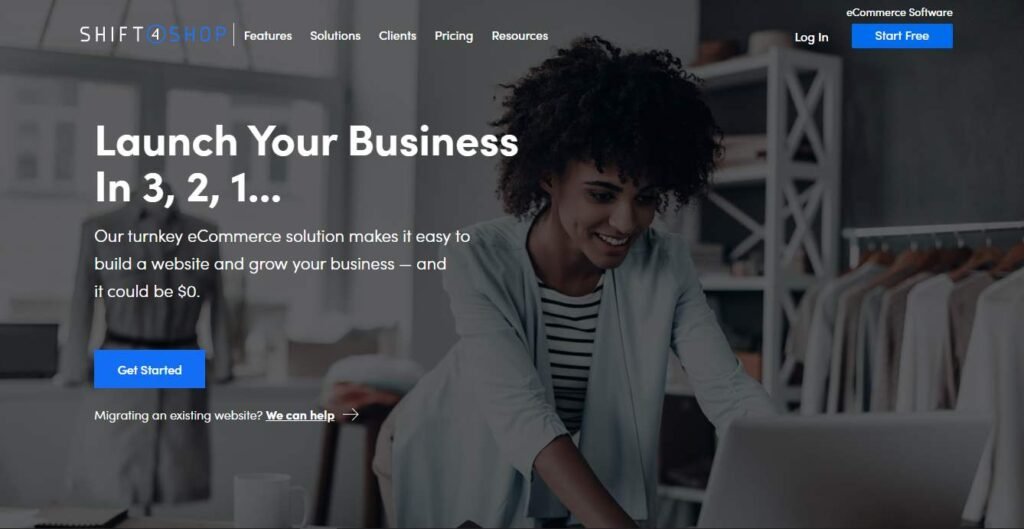
- What it Offers: A comprehensive eCommerce platform that becomes "free" if you use Shift4 Payments for all transactions. Includes robust SEO tools, email marketing, abandoned cart recovery, product reviews, wholesale pricing, and automated tax calculations.
- Pricing: Free for U.S. merchants using Shift4 Payments. Otherwise, paid plans start around $29/month.
- Volusion
- Best For: Retailers wanting a structured and reliable platform that balances ease of use with flexible features.
- What it Offers: A long-standing platform with a drag-and-drop builder, strong inventory management, discount tools, and integrated CRM. It provides a solid foundation for retailers but has some limitations in blogging and charges bandwidth fees on lower-tier plans.
- Pricing: No free plan. Plans start at $35/month.
- X-Cart
- Best For: Developers, tech-savvy store owners, and businesses needing deep customization, speed, and scalability with an open-code structure.
- What it Offers: A flexible, developer-friendly platform designed for performance. It features a one-time license purchase (or cloud subscription), supporting unlimited products, custom shipping, advanced SEO, and multi-language capabilities.
- Pricing: Requires a one-time license purchase (starts around $495) or a cloud-hosted subscription (starts around $29/month). No free plan.
- ShopWired
- Best For: UK businesses and growing brands that require robust features, strong B2B capabilities, and GDPR compliance.
- What it Offers: A UK-based platform with unlimited products, secure hosting, mobile-optimized themes, and excellent B2B features like trade accounts and VAT pricing. Offers free migration from Shopify, making it an attractive option for UK-centric businesses looking to switch.
- Pricing: No free plan, but a free trial is available. Plans start around £29/month.
C. Open-Source & Developer-Centric Solutions
These platforms offer maximum control and flexibility but require technical expertise for setup and maintenance.
13. WooCommerce
- Best For: Bloggers, developers, and businesses already using WordPress who want full control and extensive customization over their online store.
- What it Offers: A free, open-source WordPress plugin that transforms any WordPress site into a highly customizable online store. Suitable for physical and digital products, subscriptions, and comprehensive inventory management. Its strength lies in the vast ecosystem of WordPress plugins and themes.
- Pricing: Free plugin, but requires self-hosting, a domain, and potentially premium plugins/themes, which incur costs.
- OpenCart
- Best For: Developers, tech teams, or businesses that want full backend control, multi-store support, and don't mind a DIY approach to setup.
- What it Offers: A free, open-source eCommerce platform for tech-savvy users. Features multi-store support, built-in SEO tools, and an intuitive admin interface. Supports over 20 payment gateways and 8+ shipping methods. Requires technical know-how for installation and ongoing maintenance.
- Pricing: Free to download and use, but requires self-hosting and potentially developer costs.
- PrestaShop
- Best For: Global sellers and developers who desire full control, extensive customization, and don't mind managing their own hosting.
- What it Offers: Another open-source platform providing complete control with features like bulk product management, customizable themes, multilingual support, and advanced shipping options. It has a marketplace for add-ons, but generally requires technical knowledge or a dedicated developer for optimal use.
- Pricing: Free self-hosted plan is available. Costs come from hosting, add-ons, and development time.
- Webflow eCommerce
- Best For: Designers, agencies, and creative brands seeking pixel-perfect design control and dynamic content capabilities without touching code for every change.
- What it Offers: Combines unparalleled design freedom with a powerful CMS and eCommerce functionality. Ideal for creating highly custom, visually stunning stores with dynamic content and custom animations. It’s not beginner-friendly but empowers designers to build complex sites without traditional coding.
- Pricing: Basic free account for design, but eCommerce features require paid plans, starting at $29/month.
D. Niche & Specialty Platforms
These platforms cater to specific product types or business models, offering tailored features.
17. Sellfy
- Best For: Artists, YouTubers, educators, and digital entrepreneurs selling digital products (eBooks, music, art, courses), physical products, and print-on-demand items.
- What it Offers: Built for creators, focusing on ease of use, secure file hosting, instant delivery, and license control for digital goods. Includes built-in email marketing tools and integrations with social media.
- Pricing: Offers a free plan limited to 10 products. Paid plans start at $29/month.
- Podia
- Best For: Educators, coaches, and content creators primarily selling online courses, webinars, digital downloads, and memberships.
- What it Offers: An all-in-one platform designed for selling digital content. It includes built-in email marketing, landing page builders, and video hosting, with no transaction fees on paid plans. It streamlines the process for creators to monetize their expertise.
- Pricing: Offers a free plan with limited features. Paid plans start at $39/month.
- ClickFunnels
- Best For: Marketers, course creators, and digital entrepreneurs focused on high-converting sales funnels rather than traditional, multi-product eCommerce stores.
- What it Offers: Specializes in creating optimized sales funnels with built-in landing page templates, payment tools, and A/B testing. It's ideal for selling single products, services, or courses with upsells and downsells, focusing on lead generation and conversion.
- Pricing: No free plan, but a 14-day free trial is available. Plans start at $147/month.
Addressing Common Questions & Misconceptions
Which eCommerce platform is best for beginners?
Wix eCommerce, Squarespace, and Weebly by Square are generally considered the most beginner-friendly due to their intuitive drag-and-drop interfaces and guided setup processes. They require minimal technical knowledge to get started.
Are there any truly free Shopify alternatives?
Yes, Ecwid (for up to 5 products), WooCommerce (the plugin itself is free, but you pay for hosting), and Facebook Shops offer free tiers or components. Shift4Shop is also free for U.S. merchants who use Shift4 Payments. Keep in mind that "free" often comes with limitations or requires other investments (like hosting).
What's the best Shopify alternative for large businesses or enterprises?
BigCommerce and Magento (Adobe Commerce) are the top contenders for large businesses. BigCommerce offers extensive built-in features for growth, while Magento provides unparalleled scalability and customization for enterprise-level operations, especially with a dedicated development team.
Which platforms are best suited for selling digital products?
Sellfy and Podia are specifically designed for creators selling digital products like eBooks, online courses, music, and memberships, offering secure delivery and creator-focused tools.
What's the most affordable Shopify alternative overall?
The "most affordable" depends on your specific needs. Shift4Shop can be completely free for U.S. businesses using their payment gateway. WooCommerce is free as a plugin, making it very cost-effective if you already have WordPress hosting. For very small catalogs, Ecwid's free plan is a great starting point.
Which platforms are good for strong branding and visual design?
Webflow eCommerce, Squarespace, and Tilda stand out for their exceptional design capabilities, allowing for highly customized and visually striking stores that truly reflect a brand's unique identity.
Do any of these alternatives support robust blogging and content marketing?
Absolutely. Squarespace has excellent built-in blogging tools. WordPress with WooCommerce is arguably the strongest for content marketing due to WordPress's CMS capabilities. Webflow also offers powerful content management system (CMS) features for dynamic content and blogging.
Which platforms are best for fast product advertising and social selling?
Facebook Shops is explicitly designed for social-first selling on Facebook and Instagram. Ecwid also makes it incredibly easy to add a store to existing social media profiles, allowing for quick product advertising and direct sales through social channels.
Making Your Choice: A Step-by-Step Approach
Feeling overwhelmed? Don't be. Here’s a practical path to narrow down your options:
- Self-Assessment First:
- What are you selling? (Physical, digital, services, subscriptions?)
- How many products? (5, 50, 500, 5000+?)
- What's your budget? (Monthly subscription, apps, potential development costs?)
- What's your technical skill level? (Beginner, intermediate, advanced/developer?)
- Where do you primarily sell now? (Website, social media, in-person?)
- Where do you want to be in 3-5 years? (Growth projections, international sales, B2B?)
- Prioritize Your "Must-Have" Features:
- Based on the "Key Considerations" section, list 3-5 features you absolutely cannot do without. Is it low transaction fees? Unlimited customization? Easy course selling? This will immediately filter out many platforms.
- Explore Free Trials & Demos:
- Most platforms offer free trials. Take advantage of them! Build a simple test store, upload a few products, and experiment with the interface. This hands-on experience is invaluable.
- Pay attention to the setup process, how easy it is to find help, and if the interface feels intuitive to you.
- Consider Scalability and Support:
- Even if you're small now, choose a platform that can grow with you. Migrating later is a headache you want to avoid.
- Test their customer support during your trial. How quickly do they respond? Are their answers helpful?
- Read Reviews (Beyond the Hype):
- Look for reviews from businesses similar to yours. Pay attention to feedback regarding customer service, hidden costs, and platform limitations.
Your Path Forward
Choosing an eCommerce platform is a significant decision, but it doesn't have to be a daunting one. By understanding your unique business needs, knowing what to look for, and taking the time to explore your options, you can confidently select an alternative that will serve as a robust and flexible foundation for your online success. Whether you prioritize ease of use, deep customization, niche features, or raw power, there's a Shopify alternative out there that's perfectly tailored for you. Now, go forth and build your empire!